
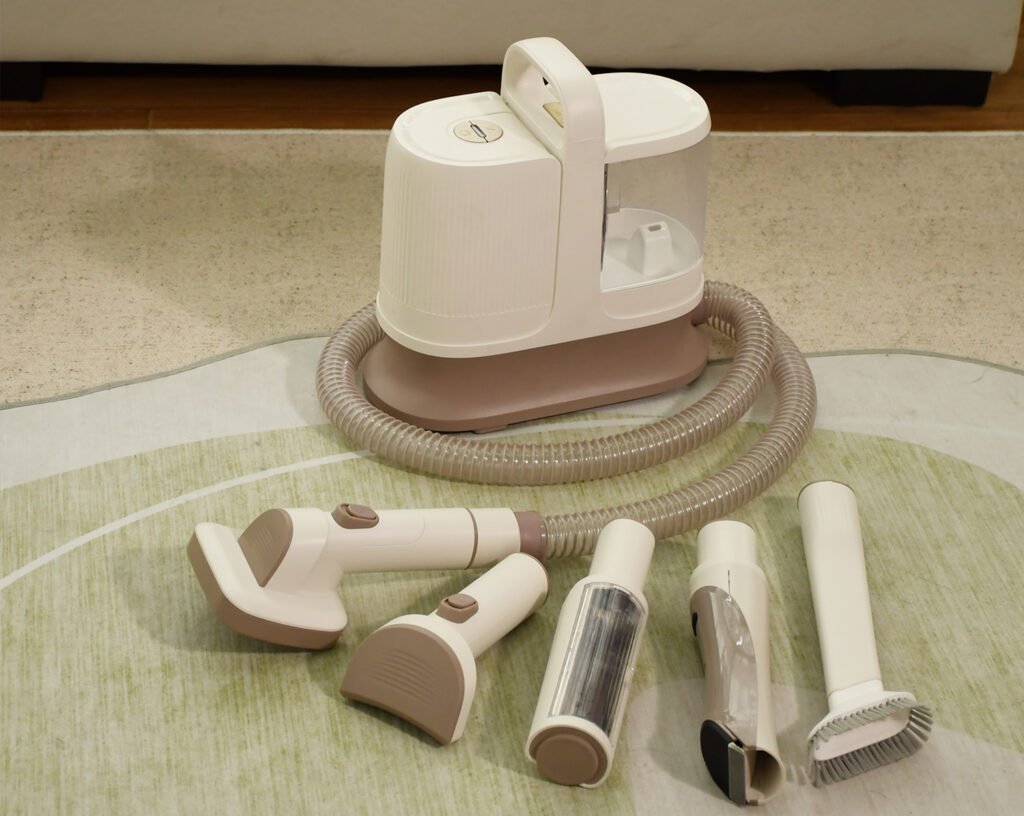
Everything You Need to Know About Dog Grooming Vacuums
Whether you’re dealing with seasonal shedding, daily loose hair, or looking for a cleaner way to groom your dog, a dog grooming vacuum can make a significant difference. Unlike traditional brushes that leave hair scattered around your home, these grooming systems collect loose fur as you brush, helping keep both your pet and your living space cleaner.
This guide explains everything you need to know—from how dog grooming vacuums work and their key benefits to choosing the right model for different coat types. Whether you’re a first-time dog owner or an experienced groomer, you’ll find practical advice, expert tips, and in-depth resources to help you make informed decisions.
On this page, you’ll learn:
- What a dog grooming vacuum is
- How grooming vacuums work
- Why many pet owners are switching to vacuum-assisted grooming
- Different types of dog grooming vacuums
- How to choose the right model for your dog
- Safe and effective grooming techniques
- Common questions and expert recommendations
Think of this page as your starting point. Throughout the guide, you’ll find links to more detailed articles covering vacuum technology, buying advice, product comparisons, grooming techniques, and trusted brands.
Why Use a Dog Grooming Vacuum?
Regular brushing has always been one of the most important parts of dog grooming, but it often comes with one frustrating problem—loose hair ends up everywhere. Floors, furniture, clothing, and even the air can quickly become covered in pet hair, especially during shedding season.
A dog grooming vacuum was designed to solve this problem. Instead of allowing loose fur to fall onto the floor while brushing, the vacuum captures the hair directly into a collection container. This creates a cleaner grooming experience while helping maintain your dog’s coat more efficiently.
Beyond keeping your home tidy, a grooming vacuum can also improve grooming consistency. Because cleanup takes much less time, many owners are more likely to groom their dogs regularly, which contributes to healthier skin, reduced matting, and better coat condition over time.
For households with heavy-shedding breeds, the difference can be especially noticeable. Dogs such as Golden Retrievers, Huskies, German Shepherds, and Labrador Retrievers can release large amounts of loose undercoat during seasonal coat changes. A grooming vacuum helps manage this loose hair before it spreads throughout the house.
Professional groomers also benefit from vacuum-assisted grooming. By collecting hair during brushing, they spend less time cleaning the workspace and more time focusing on the grooming process itself. This improved efficiency has made grooming vacuums increasingly common in both professional salons and home grooming routines.
Key Benefits at a Glance
- Less Hair Around Your Home
Loose fur is collected while grooming instead of falling onto floors, furniture, or clothing. - Improves Grooming Efficiency
Brushing and hair collection happen at the same time, reducing overall grooming time. - Supports Coat Health
Regular removal of loose undercoat and dead hair helps keep the coat cleaner and may reduce tangles and matting. - Creates a Cleaner Grooming Environment
Less airborne hair means easier cleanup after every grooming session. - Suitable for Many Coat Types
With the right attachments, grooming vacuums can be used on short-, medium-, and long-coated dogs.
When Is a Dog Grooming Vacuum Most Useful?
A grooming vacuum isn’t necessary for every dog, but it can be particularly helpful if your dog:
- Sheds heavily throughout the year
- Has a thick double coat
- Produces large amounts of loose undercoat during seasonal shedding
- Dislikes long grooming sessions
- Is groomed indoors where keeping the area clean is important
If your dog has a very short coat and sheds very little, a traditional brush may be enough. However, for many medium- and long-coated breeds, a grooming vacuum can make routine coat care more efficient and significantly reduce the amount of loose hair left around the home.
How Does a Dog Grooming Vacuum Work?
Although different brands and models vary in design, most dog grooming vacuums follow the same basic principle: they remove loose hair while you groom your dog, collecting it directly into a dust container instead of letting it spread around your home.
Unlike a standard household vacuum, a dog grooming vacuum is designed specifically for pet coat care. It combines grooming attachments with controlled suction, allowing loose fur to be captured gently during brushing rather than after it falls onto the floor.
Understanding how the system works can also help you choose the right vacuum and use it more effectively.
1. Grooming Attachment Loosens the Hair
The grooming process begins with a specially designed attachment, such as a slicker brush, deshedding tool, grooming comb, or de-matting rake.
As the attachment moves through your dog’s coat, it separates loose undercoat, removes dead hair, and helps lift trapped dirt and dander. Different attachments are designed for different coat types, so selecting the right tool is just as important as choosing the vacuum itself.
Learn more: Choosing the Right Grooming Attachment for Your Dog
2. Controlled Suction Captures Loose Fur
Once loose hair is lifted from the coat, the vacuum’s motor creates airflow that pulls the hair through the grooming head and into the hose.
Unlike a regular vacuum cleaner, grooming vacuums use controlled suction rather than maximum suction. The goal is to collect loose hair efficiently without pulling healthy hair or causing discomfort.
Many modern grooming vacuums also offer multiple suction levels, allowing owners to adjust the airflow based on their dog’s coat thickness, grooming experience, and comfort level.
3. Hair Is Collected Inside the Dust Container
Instead of falling onto your furniture or floor, the collected hair travels through the hose into a sealed dust container.
This is one of the biggest advantages of vacuum-assisted grooming. Most loose fur is captured immediately, dramatically reducing the amount of cleanup required after each grooming session.
Depending on the model, dust containers typically range from compact sizes for home use to larger capacities designed for households with multiple pets or professional grooming salons.
4. The Filtration System Traps Fine Particles
In addition to collecting hair, most grooming vacuums include one or more filters that capture fine dust, dander, and other airborne particles before clean air is released back into the room.
Many premium models use HEPA filtration, which can improve indoor air quality by trapping very small particles. This feature may be especially beneficial for households where pet dander is a concern.
Related Guide: Understanding HEPA Filters in Dog Grooming Vacuums
5. Noise Reduction Improves Your Dog’s Comfort
Because some dogs are sensitive to loud sounds, many grooming vacuums are engineered to operate more quietly than standard household vacuums.
Manufacturers often reduce noise by improving motor insulation, optimizing airflow, and using sound-dampening materials. While every dog reacts differently, a quieter machine can make it easier to introduce vacuum grooming gradually.
If your dog is nervous around vacuum cleaners, choosing a low-noise model and starting with the lowest suction setting is usually recommended.
The Four Core Components
Although designs vary, nearly every dog grooming vacuum includes four essential systems:
| Component | Function |
|---|---|
| Grooming Attachment | Loosens loose hair and undercoat while brushing. |
| Motor & Suction System | Generates controlled airflow to collect fur. |
| Dust Collection Container | Stores collected hair for easy disposal. |
| Filtration System | Captures fine dust and dander before air is exhausted. |
Understanding these components will make it much easier to compare different models and identify which features matter most for your dog’s grooming needs.
What’s Next?
Now that you understand how a dog grooming vacuum works, the next step is learning which type best suits your dog’s coat, shedding level, and grooming routine.
Dog Grooming Vacuum Types
Not all dog grooming vacuums are designed for the same purpose. Some are built for everyday home grooming, while others are designed for professional salons or dogs with heavy shedding coats.
Understanding the different types of grooming vacuums can help you choose equipment that matches your dog’s coat, grooming routine, and household needs. Rather than focusing on brand names, it’s more useful to compare each type based on its intended use and key features.
Home Grooming Vacuums
Home grooming vacuums are designed for regular pet owners who groom their dogs at home. They are typically compact, easy to store, and simple to operate.
Most home models include several basic grooming attachments, adjustable suction levels, and dust containers large enough for routine grooming sessions.
Best for:
- First-time users
- Small to medium-sized dogs
- Weekly grooming
- Indoor use
Professional Grooming Vacuums
Professional grooming vacuums are built for frequent use in grooming salons or multi-pet households.
Compared with home models, they usually offer:
- More powerful motors
- Larger dust containers
- Longer operating time
- Higher durability
- More attachment options
Although these systems are generally more expensive, they are designed to handle long grooming sessions and heavy shedding more efficiently.
Best for:
- Professional groomers
- Breeders
- Multi-dog households
- High-volume grooming
Quiet Dog Grooming Vacuums
Some dogs become anxious when exposed to loud vacuum noise. Quiet grooming vacuums are designed to reduce operating noise while maintaining effective suction.
Manufacturers may use improved airflow design, sound insulation, or quieter motors to lower noise levels.
While no grooming vacuum is completely silent, choosing a low-noise model can make it easier to introduce vacuum grooming, especially for puppies or nervous dogs.
Best for:
- Noise-sensitive dogs
- Puppies
- Senior dogs
- First-time vacuum grooming
Grooming Vacuum & Dryer Combos
Some grooming systems combine vacuum grooming with drying functions.
These combination units allow owners to brush, collect loose hair, and dry the coat using a single machine, reducing the need for multiple grooming tools.
They are especially useful after bathing long-coated or double-coated breeds, although they are generally larger and more expensive than standard grooming vacuums.
Best for:
- Full grooming routines
- Long-haired breeds
- Home grooming rooms
- Professional salons
Portable Grooming Vacuums
Portable grooming vacuums prioritize lightweight design and easy storage.
Although they usually have smaller motors and dust containers, they are convenient for apartments, travel, or occasional grooming.
Some cordless models also improve mobility, though battery life and suction performance may vary.
Best for:
- Small apartments
- Travel
- Small dogs
- Occasional grooming
Which Type Is Right for Your Dog?
There isn’t a single “best” dog grooming vacuum for every owner. The right choice depends on several factors, including:
- Your dog’s coat type
- Shedding level
- Grooming frequency
- Noise sensitivity
- Available storage space
- Budget
- Whether you groom one dog or multiple pets
Choosing a grooming vacuum based on your specific needs will usually provide better long-term results than simply selecting the model with the highest suction power or the largest number of accessories.
Continue Learning
Now that you’re familiar with the main types of dog grooming vacuums, the next step is understanding which features actually matter when comparing different models.